

























Measures to ensure accessible, seamless, visa-free experiences could turn the Asia-GCC corridor into the next great growth engine for the Middle East’s travel sector, according to industry leaders speaking at Arabian Travel Market (ATM) 2026.
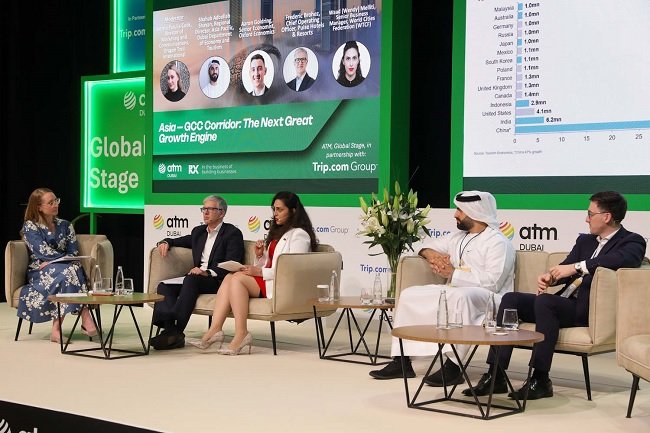
Moderated by Sienna Parulis-Cook, Director of Marketing and Communications, Dragon Trail International, the session featured perspectives from Shahab Abdollah Shayan, Regional Director Asia Pacific, Dubai Department of Economy and Tourism, Aaron Goldring, Senior Economist, Oxford Economics, Frederic Brohez, Chief Operating Officer, Pulse Hotels & Resorts, and Waad Melliti, Senior Business Manager, World Tourism Cities Federation (WTCF).
Providing context for the panel discussion with data from Oxford Economics, Goldring said: “There were record numbers in 2025 for travel into the GCC from Asia-Pacific – nearly 165 million overnight guests. That’s more than 160% higher in just six years, and we had a pandemic in the middle of that. There has been significant growth from key source markets like India, which is a huge market already and very important to the UAE. [The GCC also saw] 10% growth from China during that period.”
Commenting on the steps Dubai has taken to encourage and facilitate inbound travel from China, Shayan said: “One of the first things you need to consider when you want to double down on a market is accessibility, so we looked at how we could remove the barrier of visas for Chinese travellers coming into Dubai and the UAE. In 2016, we managed to actually achieve that.”
Highlights
-
Travel leaders examined the increasing importance and long-term growth potential of the Asia-GCC corridor at ATM 2026
-
Number of overnight guests travelling from Asia into GCC countries reached 164.8 million in 2025, 161% growth compared to 2019
-
Gulf nations have opportunity to capitalise on increasing volumes of middle-class tourists from China, India, South Korea, Malaysia and Australia
“The second point was how we could make it more seamless for Chinese travellers while they are in Dubai,” Shayan added. “That was about ensuring that we have all the payment systems available to us – training the Central Bank, the malls, the suppliers and other stakeholders in the city to be able to accept Alipay, WeChat Pay, etc. So, essentially, what we’ve done for Chinese travellers is take away all the big barriers that they would have when travelling anywhere else, and welcome them with just their passport and their phone.”
Offering her perspective on the impact that visa-related reforms have had on the volumes of people travelling from the GCC to Asia – with specific reference to China – Melliti said: “China achieved complete visa-free coverage across all the GCC countries in 2018, and the numbers are extremely encouraging. In 2025, arrivals to China from the six GCC countries exceeded 150,000, representing a 100% increase compared with 2024. Arrivals from Saudi Arabia increased by around 110%, while UAE arrivals increased by 113%. These numbers reflect the extreme interest of GCC travellers in visiting and discovering China.”
Speaking on evolving consumer expectations and what they mean for hospitality brands located along the Asia-GCC corridor, Brohez said: “From an operator’s perspective, it’s about making sure we’re creating the right product, that we’re targeting it at the right customer and through the right channels. As we see travellers look for experiential holidays and vacations – from the GCC, of course, but also across Asia and the world – we are keen to bring new brands to life to reflect that.”
Danielle Curtis, Regional Portfolio Director – UAE, RX Global, said: “The Asia-GCC corridor clearly represents a huge opportunity for the travel and tourism industry. Public and private sector leaders in both regions have gone to great lengths to enable accessible, seamless, visa-free travel, and those efforts will no doubt continue paying dividends as increasing numbers of visitors look to explore and experience what the Middle East and Asia-Pacific markets have to offer.”