














Once known as the Queen of the Arabian Sea, this port city – Kochi has held an important place on the Indian Peninsula for a long time. From cinema halls, shopping malls, and skyscrapers to beautiful monuments and a variety of linguistic and ethnic communities including Jews, Konkinis and Gujaratis, Kochi greets all its visitors with a multitude of colours and hues.
The amalgamation of cultures is what makes God’s Own Country special, and nowhere is it more obvious than Fort Kochi. Take a walk and let the old buildings remind you of tales from when the area was a colony under a plethora of foreign rulers. They all left their marks, but Fort Kochi never lost its own soul. It imbibed the best of everything that each legacy that passed through it had to offer, while always staying true to its roots.
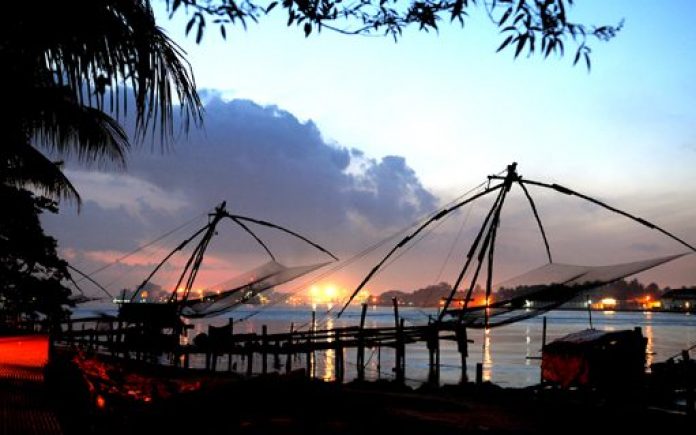
Legend has it that the famous Chinese explorer, Zheng He, introduced the Chinese Fishing Nets to the fishermen in Kochi over 500 years ago. Even though he would leave, these would become staple sights in these parts. The Chinese fishing nets, or Cheenvala for the locals, have attracted visitors in the Fort Kochi area for centuries. Most tour guides swear that the Vasco da Gama Square is the best spot to get the perfect view of these massive structures.
Dawn and dusk is when one can see the Cheenvala in action. Over four fishermen operate one of these nets which are constructed of bamboo and teak poles. Their design is unique, enabling only one person pulling at the main plank to be able to drag it into the sea. Certain teak poles have lights on them that are supposed to attract fish. Watching these majestic nets being suspended in mid-air, row upon row, is a truly spellbinding experience.
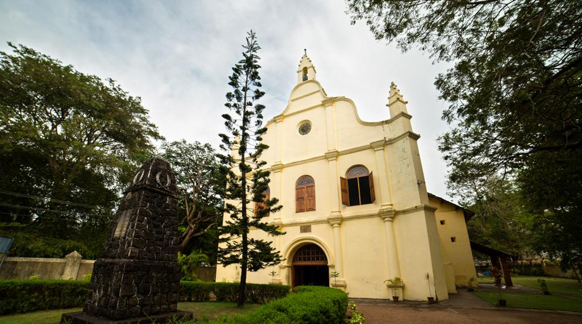
The St. Francis Church, well-known for its beautiful structural design and ambience, has an important place in history. It is here that the famous explorer, Vasco-da-Gama, was originally buried. His remains would be taken back 14 years later but to this day, the exact spot is clearly marked. The place is known for its deep Dutch and Portuguese influences and is an architectural marvel in itself.
The credit for its construction goes to the Portuguese Franciscan Friars in 1503. Originally made with mud and wood, it went under a lot of work with the Portuguese, Dutch and the British leaving their imprints on the place. Eventually it would come under the control of the Church of South India in 1949.
Visitors are especially charmed by its gabled timber framed roof. The interiors have two stepped pinnacles crowning the top of the chancel roof. The entire experience is the epitome of old school charm; from the pulpit made of wood decorated to the confessional to the baptism platform. History has left its imprint here, which is evident to this day.
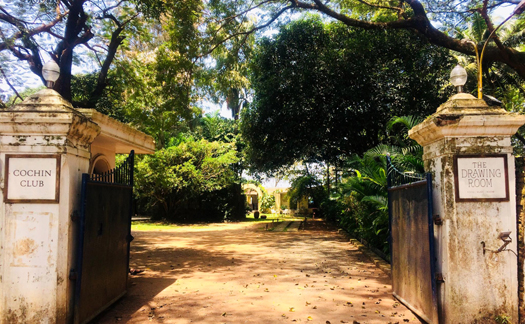
Cochin Club, the early 19th century witnessed the sprouting of many elite clubs in Fort Kochi. The Cochin Club is one of the prominent clubs. Situated opposite the St Francis Church and within a beautiful garden, the club was earlier known as English Club. At that time, the membership was restricted to the British and Indian men and reflected the life of the Britons in Kochi.
Records say that Cochin Club was a venue for large gatherings of the British and that its members were the elite of Kochi. Wednesdays and Saturdays were the club days. Many who featured in the commercial history of Kochi such as the highly placed officials of companies like Pierce Leslie and Aspinwall were members.
The club still maintains records of its old British members and photographs of them attending club parties in formal evening attire. Post Independence, the British members of the club used to observe Independence Day by hoisting the Indian flag and singing the national anthem at the club.
The United Club was one of the elite clubs of the young Kochi. Presently, the premises of the club, that has lost its past glory, is used by the St. Francis primary school during the day. In the evening, it is a card room for its members. During the early decades of the 20th century, the club was used as the office of the Fort Kochi municipality.
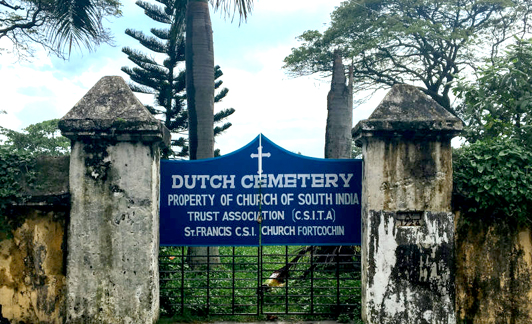
The Dutch Cemetery, down the road from St Francis Church, that runs parallel to the beach, stands the Dutch Cemetery. The cemetery, which was consecrated in 1724, is believed to be the oldest in the country. The cemetery, built in the style of the Dutch architecture of the time, is surrounded by walls and the year 1724 is engraved on the entrance pillar. The epitaphs and tombs, numbering 104, carry the authentic records of hundreds of people of Dutch and British nationality.
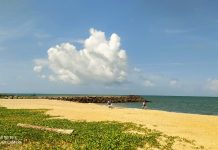
The Fort Kochi Beach, with its clean premises and tranquil atmosphere, is frequented by tourists as well as the local people. There are many factors that differentiate the beach from the other beaches of Kerala. The presence of the Chinese fishing nets is probably the most easily identifiable one. The trees and the greenery on the walkway to the beach add to the serene atmosphere there. It is on these beaches that the famous Cochin Carvinal is conducted on New Year’s Eve.
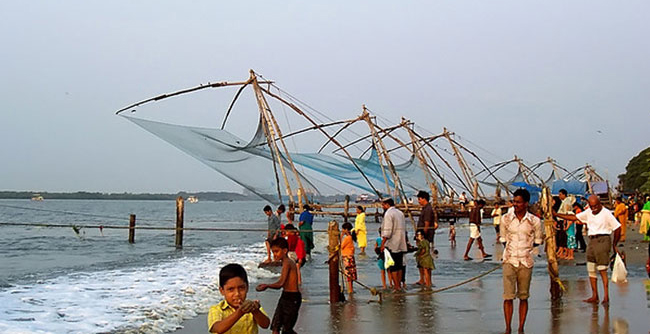
The sea food, the Vasco da Gama Square adjacent to the beach, a light house and a granite walkway are the other main attractions. The beach also gives you a breathtaking view of the sunset. If you are lucky, you may glimpse cargo ships passing through the sea. The remains of the Fort Immanuel can also be seen here. A section of the beach is not accessible to visitors as it is under the control of the Indian Navy.
Princess Street is one of the oldest streets in Fort Kochi. The bungalows built in the European style and the other buildings of colonial architecture lining both sides of the street make it pretty as a picture. The buildings here, with bronze stucco walls and peeling plaster, house antique stores, cigar shops, provisional stores, curio shops, kiosks, cafes, restaurants, art galleries and so on. Some are being used as homestays for tourists. For the best view of the street, head for the Loafer’s Corner, a popular meeting place at the confluence of Princess Street, Peter Celli Street and Bastion Street.
Getting Here
Nearest Railway Station: Ernakulam, about 1½ km from the main boat jetty
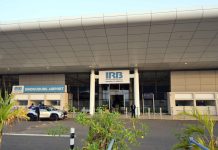
Nearest Airport: Cochin International Airport, about 30 km from Ernakulam