






































By Neha Kirpal
On a recent trip to the sleepy city of Nashik, I got to explore some of its unique treasures. From holy temples, such as Trimbakeshwar, Goreram, Kalaram and Kapaleshwar Mandir, the evening aarti on the ghats of the Godavari river, the Kumaramangalam Artillery Museum and sampling local delicacies, like vada pav, poha and pav bhaji – I got a great insight into the place and its customs. One of the most interesting experiences, however, was a visit to Nashik’s first and biggest winery, Sula Vineyards, which is also one of the most eco-friendly wineries in the world.

With over 100 wineries, Nashik is known as the wine capital of India. It’s understandable, given that the climate here is perfect for making wine. In fact, 80 percent of Indian wine is produced in Nashik. Walking into Sula Vineyards, one encounters a beautifully manicured green oasis filled with a variety of plants and colourful flowers. Sula also offers a resort with luxurious rooms where visitors can stay as well as an Italian and Indian restaurant. The facility reportedly gets 3 lakh visitors per year.

The company, which just completed 25 years, follows a number of sustainability practices, such as the fact that 60%-70% of its facility is run on solar power. It also follows organic farming and uses no chemicals and fertilizers in its plants. Further, the skins of the grapes and other waste is later used as compost in their lush vineyards. Sula was recently recognised at the Asian Sparkling Masters 2024. Its wine tourism segment recorded its highest-ever Q3 revenue, and they also recently launched their Dindori Tasting Room & Bottle Shop. Further, SulaFest, the first wine festival in a winery, also returned in early February this year after a five-year hiatus.
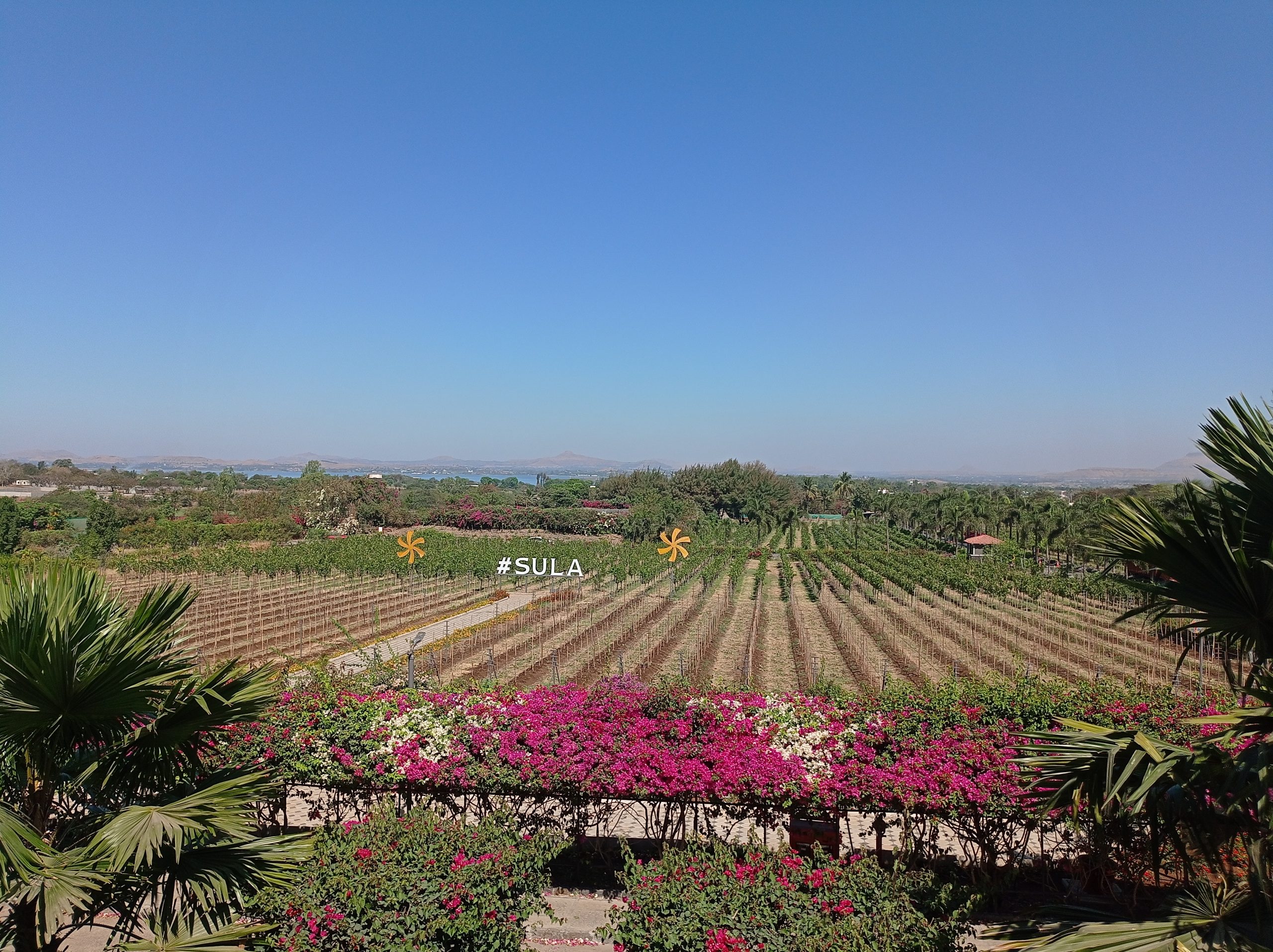
During the all-access guided tour of its fully organic, chemical-free campus, I learnt that the wine making process involves five simple steps. First, harvesting takes place from January to March, when 5,600-6,000 tonnes of green and black grapes are harvested. They are then brought to a crush pad, where the grapes are crushed and pressed. After this, the grapes are sent to a tank cellar, which has about 200 stainless steel temperature tanks with a capacity ranging from 2,000 to 1,00,000 litres. Next comes the process of fermentation, whereby yeast is added to these tanks, which converts the sugar into alcohol and carbon dioxide. That’s how two categories of wine – sparkling (with bubbles) and still (without bubbles) – are formed.
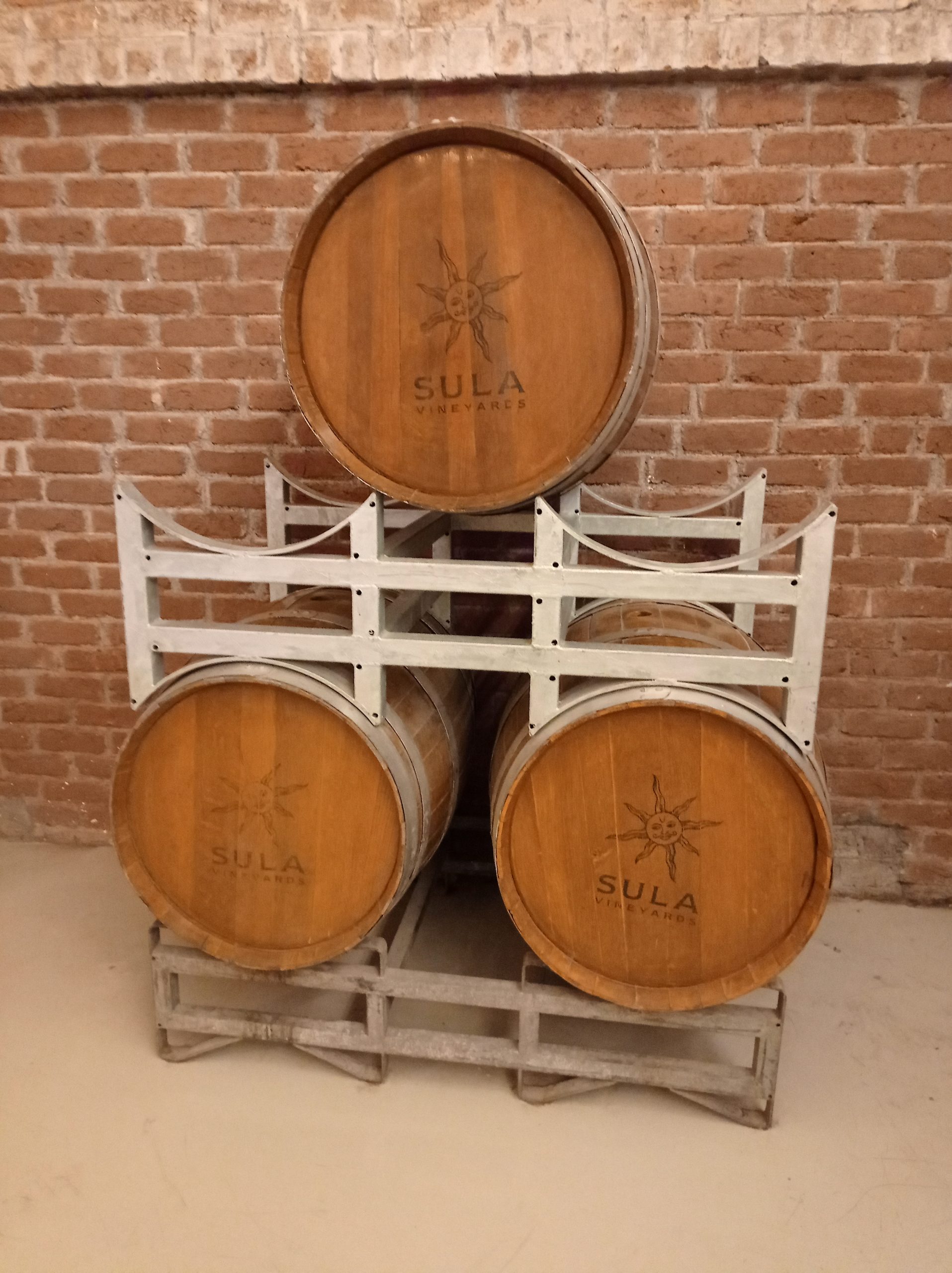
Further, I learnt that there are three styles of wines. White wines, made of green grapes, are fermented in the tanks for 15 to 20 days at temperatures ranging between 15 and 18 degrees Celsius. Red wines, made of black grapes, are fermented in the tanks for 20 to 25 days at temperatures ranging between 25 and 30 degrees Celsius. Rosé wines owe their pinkish tinge to a combination of green and black grapes.
After the process of fermenting, the wines are aged for about 6 to 8 months (white wines) and 12 to 18 months (red wines) in French and American oak barrels, which are porous in nature. Ageing the wine reduces its tannins and introduces new flavours in them. The price of a barrel ranges from Rs 80,000-90,000, and each has a capacity of 225 litres.
The temperature in the barrel room is maintained at between 14 to 16 degrees Celsius. Each barrel makes approximately 300 bottles of wine. The tour ended with a personalised tasting session in India’s first wine tasting room, where I got to sample six different varieties of wine. A tasting executive told me the rule of the 5 Ss for the tasting: see, swirl, smell, sip and spit.